Visit Wilderness
Search for a wilderness as the destination for your next outdoor adventure.
Why Visit Wilderness?
Learn more about the diverse ways in which we benefit from wilderness and threats wilderness areas face today.
1
Search for a wilderness as the destination for your next outdoor adventure.

While wilderness can be appreciated from afar—through online content, television, or books—nothing compares to experiencing it firsthand. Activities like camping, hiking, or hunting allow you to fully enjoy the recreational, ecological, spiritual, and health benefits that wilderness areas offer. These areas provide “outstanding opportunities for solitude or a primitive and unconfined type of recreation,” chances to observe wildlife, moments to renew and refresh, and the physical benefits of outdoor exercise. In many wilderness areas, you can even bring your well-behaved dog.
Learn more about the diverse ways in which we benefit from wilderness and threats wilderness areas face today.
The Welcome Creek Wilderness is located in the Rock Creek drainage 25 miles east of Missoula, Montana.
This 28,135 acre Wilderness measures, approximately, nine miles by seven miles. The ridges are steep, the valleys narrow, and numerous talus slopes are found throughout the landscape.
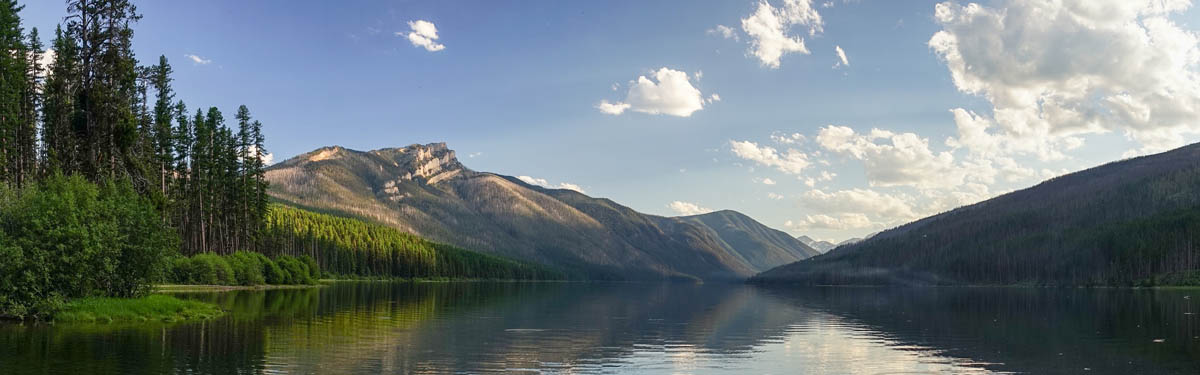
Most of this Wilderness is heavily forested with pine, fir and larch.
South-facing areas have a few open, steep, and grassy slopes that provide winter range for deer and elk. Mountain lions, moose, black bears, and the occasional grizzly bear also wander through these mountains.
Welcome Creek itself flows cold and clear providing habitat for native trout.
There are approximately 28 miles of trail in this Wilderness area, as well as, outstanding opportunities for solitude.
There are no lakes in this Wilderness.
How to follow the seven standard Leave No Trace principles differs in different parts of the country (desert vs. Rocky Mountains). Click on any of the principles listed below to learn more about how they apply in the Welcome Creek Wilderness.
For more information on Leave No Trace, Visit the Leave No Trace, Inc. website.
Digital and paper maps are critical tools for wilderness visitors. Online maps can help you plan and prepare for your visit ahead of time. You can also carry digital maps with you on your GPS unit or other handheld GPS device. Having a paper map with you in the backcountry, as well as solid orienteering skills, however, ensures that you can still route-find in the event that your electronic device fails.
Motorized equipment and equipment used for mechanical transport is generally prohibited in all wilderness areas. This includes the use of motor vehicles, motorboats, motorized equipment, bicycles, hang gliders, wagons, carts, portage wheels, and the landing of aircraft including helicopters.
Date: February 24, 1978
Acreage: 28,440 acres
Endangered American Wilderness Act - Public law 95-237 (2/24/1978) To designate certain endangered public lands for preservation as wilderness, and for other purposes
For more information (To download or see all affected wilderness areas) visit our law library for 95-237 or special provisions for 95-237 or legislative history for 95-237 for this law.
People who volunteer their time to steward our wilderness areas are an essential part of wilderness management. Contact the following groups to inquire about volunteer opportunities. Groups are listed alphabetically by the state(s) in which the wilderness is located.